Platform comparison
| Platform | YES odds | NO odds | Fee | KYC | Settlement | |
|---|---|---|---|---|---|---|
Polymarket Klarna UK Pick polygram.ink |
4% | 96% | 0% (USDC on-chain) | No-KYC up to $1,500 | USDC, auto via UMA oracle | Open on Polymarket Klarna UK → |
Polymarket polymarket.com |
4% | 96% | 0% | Geo-blocked in US/UK/EU | USDC, on-chain | Open on Polymarket Klarna UK → |
Kalshi kalshi.com |
— | — | Up to 7% per trade | US-only, KYC required | USD | Open on Polymarket Klarna UK → |
Betfair Exchange betfair.com |
— | — | 2-5% commission | Full KYC from first trade | GBP / EUR | Open on Polymarket Klarna UK → |
Manifold Markets manifold.markets |
— | — | Play-money (mana) | None — play-money | Mana (no cash-out) | Open on Polymarket Klarna UK → |
Live odds for Polymarket-based markets come from the Polygon order book. Non-Polymarket venues show attributes only; clicking any row opens the market on Polymarket Klarna UK.
Active sub-markets
| United Kingdom | 4% YES | 96% NO |
| France | 8% YES | 93% NO |
| Germany | 3% YES | 97% NO |
| Italy | 4% YES | 96% NO |
| Netherlands | 5% YES | 95% NO |
| Japan | 3% YES | 97% NO |
Market context
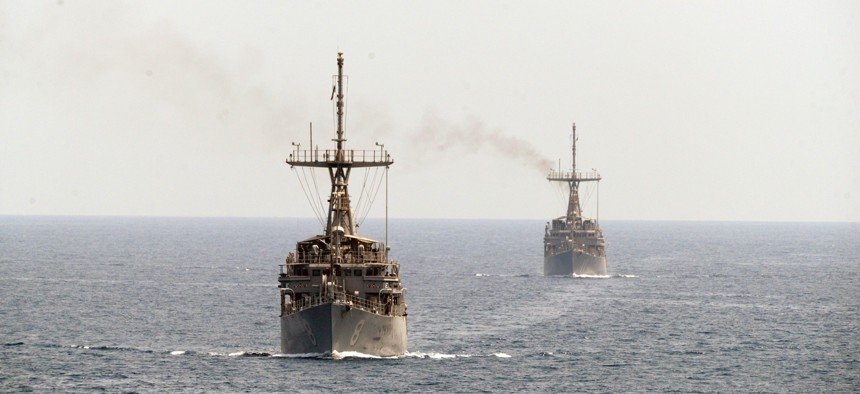
Warship transits through the Strait of Hormuz—the narrow waterway separating Iran and Oman through which roughly one-third of global seaborne oil passes—occur regularly as part of routine naval operations by the US Navy, allied Gulf states, and occasionally European task forces. The question of whether additional nations will send military vessels through this chokepoint by mid-2026 hinges on whether geopolitical tensions, regional conflicts, or strategic repositioning prompt new actors to demonstrate naval presence in one of the world's most monitored maritime corridors.
Historical precedent suggests warship transits through Hormuz are commonplace rather than exceptional. The US Navy has maintained a continuous presence for decades; Saudi, UAE, and Bahraini naval forces operate regularly; and France, the UK, and Japan have all conducted transits in recent years as part of freedom-of-navigation operations or coalition activities. The 4% implied probability reflects the market's assessment that the threshold for *new* country participation is high—most major naval powers either already transit the strait or lack the capability to do so. Transits by smaller nations or those without established Gulf operations remain possible but require either a significant escalation in regional conflict or a deliberate policy shift.
Traders should monitor announcements from the US Central Command regarding task force deployments, statements from Iran about maritime restrictions, and any escalation in Yemen-based Houthi attacks on shipping. The International Maritime Organization and regional naval coalitions publish transit data; recent reporting from Reuters and the Financial Times has tracked increased drone and missile activity near the strait. Deposit friction via Klarna or SEPA transfers remains low for UK-based traders, allowing rapid position entry as new intelligence emerges about potential naval deployments through mid-2026.
Methodology
We track Which countries will send warships through the Strait of Hormuz by June 30? on the five venues with material liquidity for prediction markets. Live odds come from the Polymarket Polygon order book — the only source that ships real-time data under an open licence. For Kalshi, Betfair and Manifold we list platform attributes (fee, KYC, settlement, payment) instead of fabricated odds, because their APIs use non-comparable contract definitions.
Resolution & payout
Settlement runs on-chain. Polymarket's contract logic separates YES and NO shares as conditional tokens; at resolution the winning share lifts to $1.00 and the losing one to $0. The outcome input comes from the UMA Optimistic Oracle, which secures against bad resolution with a bond + dispute window.
Once finalised, the smart contract pays USDC to the holders' wallets within minutes — no withdrawal fees beyond Polygon network gas. Kalshi settles in USD via CFTC clearance, Betfair in account currency net of commission, Manifold in play-money mana with no cash-out.
FAQ
- Where can I trade this market with the lowest fees?
- On Polymarket Klarna UK, which mirrors the Polymarket order book at 0% fees. Kalshi charges up to 7% per trade; Betfair Exchange takes 2-5% commission on net winnings.
- How does resolution work?
- Through the UMA Optimistic Oracle on Polygon: a proposer submits the outcome, a two-hour challenge window opens, and USDC payouts settle automatically once the result is final.
- What's the difference between YES and NO shares?
- A YES share pays $1.00 if the event happens, $0 otherwise. A NO share pays $1.00 if the event doesn't happen. The market price between 0¢ and 100¢ is the implied probability.
- Do I need to KYC for this market?
- Not under $1,500 of lifetime trading volume. Above that threshold, Polymarket Klarna UK triggers a quick verification flow that finishes in minutes.
- How reliable are the quoted odds?
- The YES/NO percentages are the live mid-prices of the Polymarket order book. On deep markets they move every few seconds; on thinner ones you'll see short plateaus.
%22%2F%3E%3Cpath%20d%3D%22M%206%2066%20A%2026%2026%200%200%201%2058%2066%22%20fill%3D%22%23E6B98D%22%20opacity%3D%220.9%22%2F%3E%3Ccircle%20cx%3D%2232%22%20cy%3D%2226%22%20r%3D%2222%22%20fill%3D%22%23F5CBA7%22%2F%3E%3Crect%20x%3D%2210%22%20y%3D%224%22%20width%3D%2244%22%20height%3D%2214%22%20rx%3D%227%22%20fill%3D%22%2310b981%22%20opacity%3D%220.9%22%2F%3E%3Crect%20x%3D%228%22%20%20y%3D%2218%22%20width%3D%228%22%20%20height%3D%2218%22%20rx%3D%224%22%20fill%3D%22%2310b981%22%20opacity%3D%220.7%22%2F%3E%3Crect%20x%3D%2248%22%20y%3D%2218%22%20width%3D%228%22%20%20height%3D%2218%22%20rx%3D%224%22%20fill%3D%22%2310b981%22%20opacity%3D%220.7%22%2F%3E%3C%2Fsvg%3E) and
and%22%2F%3E%3Cpath%20d%3D%22M%206%2066%20A%2026%2026%200%200%201%2058%2066%22%20fill%3D%22%23E6B98D%22%20opacity%3D%220.9%22%2F%3E%3Ccircle%20cx%3D%2232%22%20cy%3D%2226%22%20r%3D%2222%22%20fill%3D%22%23F5CBA7%22%2F%3E%3Crect%20x%3D%2214%22%20y%3D%224%22%20width%3D%2236%22%20height%3D%228%22%20rx%3D%224%22%20fill%3D%22%2310b981%22%2F%3E%3C%2Fsvg%3E)
Trade Which countries will send warships through the Strai… on Polymarket Klarna UK
Live order book, 0% fees, USDC settlement in seconds.
Trade on Polymarket Klarna UK →