Platform comparison
| Platform | YES odds | NO odds | Fee | KYC | Settlement | |
|---|---|---|---|---|---|---|
Polymarket (via Polymarket Klarna UK) Pick polygram.ink (preferred broker) |
96% | 4% | 0% (USDC on-chain) | No-KYC up to $1,500 | USDC, auto via UMA oracle | Go to the live market → |
Polymarket (direct) polymarket.com |
96% | 4% | 0% | Geo-blocked in US/UK/EU | USDC, on-chain | Go to the live market → |
Kalshi kalshi.com |
— | — | Up to 7% per trade | US-only, KYC required | USD | Go to the live market → |
Betfair Exchange betfair.com |
— | — | 2-5% commission | Full KYC from first trade | GBP / EUR | Go to the live market → |
Manifold Markets manifold.markets |
— | — | Play-money (mana) | None — play-money | Mana (no cash-out) | Go to the live market → |
Outcome probabilities
Current market-implied probability for each outcome, from the live order book.
| Outcome | Probability |
|---|---|
| 0 | 96% |
| 1 | 3% |
| 4 | 1% |
| 2 | 0% |
| 3 | 0% |
| 5 | 0% |
| >5 | 0% |
Market context
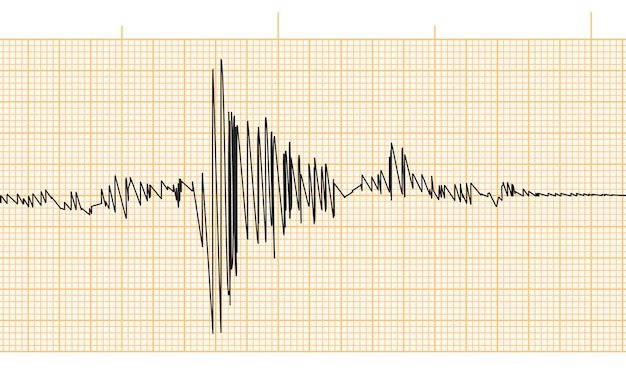
A 6.5+ earthquake count for 3–9 August is usually driven by whether one or two large offshore ruptures occur in the Pacific ring of fire, not by the much denser stream of smaller events that dominate daily seismic logs. The market’s **96% YES** pricing implies traders see at least one qualifying quake as the base case, with the remaining question being whether the week finishes with a second event before the USGS closes the window. Recent 2026 activity shows that larger shocks are still appearing, but the calendar is punctuated by mostly sub-6.5 earthquakes and aftershock sequences, including a M 6.5 aftershock tied to Mexico’s Chiapas sequence reported in early August[15][16][18].
Comparable weeks often hinge on a single high-magnitude event rather than sustained elevated activity, so the probability can stay high even when the public feed looks quiet. In the 2026 earthquake listings, August already includes multiple notable moderate-to-strong shocks, but only a few have reached the 6.5 threshold, which is the relevant bar for settlement[7][10]. For traders, that means the current price is less about whether the earth is “active” in general and more about whether one more large rupture appears in a subduction zone where the USGS catalogue could add it late if origin and magnitude review lag the event time[1][2][10].
The main catalysts are live USGS updates, especially for Pacific and Mediterranean subduction margins, plus any large aftershock sequence that can produce an additional 6.5+ reading within hours or days. Funding friction matters here because sharper book depth tends to follow easier deposits and faster settlement rails: markets that support card-style top-ups, SEPA transfers, Klarna, or USDC on-ramp flows generally attract more timely hedging when a new quake headline lands. That can matter in a thinly traded science market, where liquidity often expands only after a new event is visible on the official catalogue rather than when regional media first reports shaking[1][2][6][18].
Methodology
This page compares How many 6.5 or above earthquakes August 3 - August 9? with a focus on payment rails and deposit friction. Polymarket accepts USDC on Polygon only; Kalshi only ACH/Plaid (US only); Betfair card/SEPA in EU/UK; Manifold no deposit. Polymarket Klarna UK additionally offers Klarna and SOFORT as fiat on-ramps to USDC. Live odds reflect the Polymarket order book.
Resolution & payout
Settlement path determines payout latency. Polymarket settles on-chain (USDC, minutes). Broker frontends like Polymarket Klarna UK add Klarna/SOFORT as fiat withdrawal options with T+1 processing. Kalshi: USD via ACH (T+1 to T+3). Betfair: local currency via card/SEPA (T+1 to T+5).
UK Frequently Asked Questions
- How does Klarna deposit work on Polymarket Klarna UK?
- You enter the deposit amount in EUR/GBP, choose Klarna as the method, run through Klarna's standard authentication (Pay Later or Direct Bank Transfer), and Polymarket Klarna UK converts internally to USDC for the Polymarket order book. Processing: typically under 30 minutes.
- What does SOFORT cost as a deposit method?
- Polymarket Klarna UK charges no fees for SOFORT. The only cost is the internal FX spread (typically <1%) on EUR→USDC conversion. SOFORT itself has no end-user fees — the platform absorbs acquirer costs.
- Can UK traders use Klarna to deposit on Polymarket?
- Polymarket does not natively accept Klarna. To fund a Polymarket account from the UK, you must first purchase USDC via a crypto exchange (Coinbase UK, Kraken) or Revolut, then transfer to a Polygon-compatible wallet. Some third-party on-ramps (MoonPay, Transak) accept UK debit cards and may support Klarna buy-now-pay-later for crypto purchases.
- What payment methods can UK users use for Polymarket?
- UK traders typically use: (1) Coinbase UK or Kraken — buy USDC with GBP debit card or bank transfer; (2) Revolut — buy crypto and send to wallet; (3) MoonPay or Transak — Visa/Mastercard UK debit card directly to USDC on Polygon. Standard GBP-to-USDC conversion fees range from 0.5–2.5%.
- How long do Polymarket withdrawals take for UK users?
- Polymarket withdrawals to your Polygon wallet are instant (on-chain). Converting USDC back to GBP via Coinbase UK or Kraken typically takes 1–3 business days for bank transfer, or near-instant for Revolut. Polygon gas fees are minimal (<$0.01 per transaction).
%22%2F%3E%3Cpath%20d%3D%22M%206%2066%20A%2026%2026%200%200%201%2058%2066%22%20fill%3D%22%23E6B98D%22%20opacity%3D%220.9%22%2F%3E%3Ccircle%20cx%3D%2232%22%20cy%3D%2226%22%20r%3D%2222%22%20fill%3D%22%23F5CBA7%22%2F%3E%3Crect%20x%3D%2210%22%20y%3D%224%22%20width%3D%2244%22%20height%3D%2214%22%20rx%3D%227%22%20fill%3D%22%2310b981%22%20opacity%3D%220.9%22%2F%3E%3Crect%20x%3D%228%22%20%20y%3D%2218%22%20width%3D%228%22%20%20height%3D%2218%22%20rx%3D%224%22%20fill%3D%22%2310b981%22%20opacity%3D%220.7%22%2F%3E%3Crect%20x%3D%2248%22%20y%3D%2218%22%20width%3D%228%22%20%20height%3D%2218%22%20rx%3D%224%22%20fill%3D%22%2310b981%22%20opacity%3D%220.7%22%2F%3E%3C%2Fsvg%3E) and
and%22%2F%3E%3Cpath%20d%3D%22M%206%2066%20A%2026%2026%200%200%201%2058%2066%22%20fill%3D%22%23E6B98D%22%20opacity%3D%220.9%22%2F%3E%3Ccircle%20cx%3D%2232%22%20cy%3D%2226%22%20r%3D%2222%22%20fill%3D%22%23F5CBA7%22%2F%3E%3Crect%20x%3D%2214%22%20y%3D%224%22%20width%3D%2236%22%20height%3D%228%22%20rx%3D%224%22%20fill%3D%22%2310b981%22%2F%3E%3C%2Fsvg%3E)
Trade How many 6.5 or above earthquakes August 3 - August 9? on Polymarket Klarna UK
Live order book, 0% fees, USDC settlement in seconds.
Open live market →