Platform comparison
| Platform | YES odds | NO odds | Fee | KYC | Settlement | |
|---|---|---|---|---|---|---|
Polymarket (via Polymarket Klarna UK) Pick polygram.ink (preferred broker) |
18% | 82% | 0% (USDC on-chain) | No-KYC up to $1,500 | USDC, auto via UMA oracle | Go to the live market → |
Polymarket (direct) polymarket.com |
18% | 82% | 0% | Geo-blocked in US/UK/EU | USDC, on-chain | Go to the live market → |
Kalshi kalshi.com |
— | — | Up to 7% per trade | US-only, KYC required | USD | Go to the live market → |
Betfair Exchange betfair.com |
— | — | 2-5% commission | Full KYC from first trade | GBP / EUR | Go to the live market → |
Manifold Markets manifold.markets |
— | — | Play-money (mana) | None — play-money | Mana (no cash-out) | Go to the live market → |
Outcome probabilities
Current market-implied probability for each outcome, from the live order book.
| Outcome | Probability |
|---|---|
| US | 18% |
| France | 9% |
| UK | 8% |
| Germany | 8% |
| Netherlands | 5% |
| Italy | 5% |
| Greece | 3% |
| Australia | 1% |
Market context
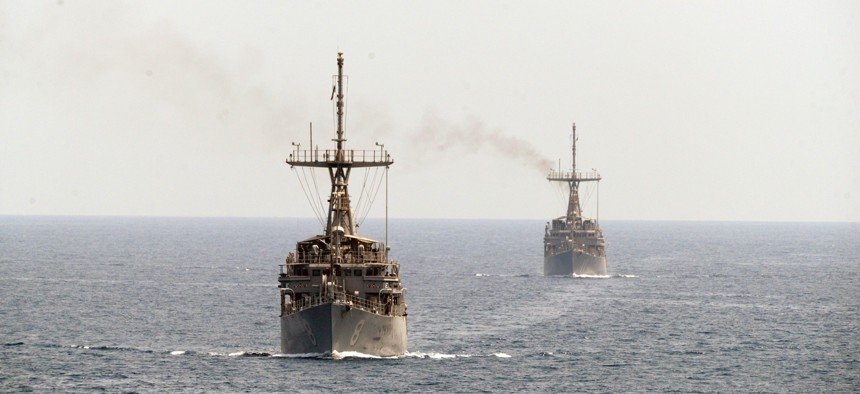
The real-world trigger is straightforward: whether a country’s naval vessel, or a military cargo or support ship treated as a warship for this market, physically passes through the Strait of Hormuz before 31 August. That is a narrow evidentiary test, but the crowd is still pricing only an 8% chance of any qualifying transit, which suggests traders see a gap between rhetorical support for maritime security and an actual deployment order that reaches the strait.
The best historical guide is the pattern from the 2026 Hormuz crisis itself: shipping disruption, diplomatic pressure, and repeated calls for escorts did not quickly translate into broad allied naval transits. Reuters reported in late June that the UN halted ship-escort operations after a vessel came under attack, while later reporting in July said Iran had declared the strait closed after further strikes, underlining how volatile the corridor has been.[17][18] Earlier coverage also noted that no country had publicly committed to sending warships, and that Japan and others had already signalled reluctance, while Germany, Spain, Italy and Australia were reported to be out.[19][15] In other words, the market’s low probability is consistent with a world where operational caution, not headline-level alignment, determines whether ships actually move.
For traders, the main catalysts are official defence announcements, coalition language from the US, UK, France, Japan, South Korea and Gulf partners, and any published escort or transit schedules. Reuters’ and BBC’s reporting around March showed discussions about a “feasible plan” remained unresolved, even as Trump publicly urged allies to contribute ships.[6][12][15] On the funding side, this market should stay sensitive to deposit frictions: Klarna and card rails can pull in casual flow quickly, while SEPA and USDC tend to support larger, faster top-ups, which can deepen book liquidity when geopolitical headlines hit and create more responsive pricing around new naval commitments.
Methodology
This page compares Which countries will send warships through the Strait of Hormuz by August 31? with a focus on payment rails and deposit friction. Polymarket accepts USDC on Polygon only; Kalshi only ACH/Plaid (US only); Betfair card/SEPA in EU/UK; Manifold no deposit. Polymarket Klarna UK additionally offers Klarna and SOFORT as fiat on-ramps to USDC. Live odds reflect the Polymarket order book.
Resolution & payout
Settlement path determines payout latency. Polymarket settles on-chain (USDC, minutes). Broker frontends like Polymarket Klarna UK add Klarna/SOFORT as fiat withdrawal options with T+1 processing. Kalshi: USD via ACH (T+1 to T+3). Betfair: local currency via card/SEPA (T+1 to T+5).
UK Frequently Asked Questions
- How does Klarna deposit work on Polymarket Klarna UK?
- You enter the deposit amount in EUR/GBP, choose Klarna as the method, run through Klarna's standard authentication (Pay Later or Direct Bank Transfer), and Polymarket Klarna UK converts internally to USDC for the Polymarket order book. Processing: typically under 30 minutes.
- Which payment methods are supported?
- Klarna (Pay Now / Pay Later), SOFORT, SEPA bank transfer, credit card (Visa/Mastercard), Apple Pay, Google Pay, and direct USDC deposit on Polygon. Availability depends on your jurisdiction.
- Can UK traders use Klarna to deposit on Polymarket?
- Polymarket does not natively accept Klarna. To fund a Polymarket account from the UK, you must first purchase USDC via a crypto exchange (Coinbase UK, Kraken) or Revolut, then transfer to a Polygon-compatible wallet. Some third-party on-ramps (MoonPay, Transak) accept UK debit cards and may support Klarna buy-now-pay-later for crypto purchases.
- What payment methods can UK users use for Polymarket?
- UK traders typically use: (1) Coinbase UK or Kraken — buy USDC with GBP debit card or bank transfer; (2) Revolut — buy crypto and send to wallet; (3) MoonPay or Transak — Visa/Mastercard UK debit card directly to USDC on Polygon. Standard GBP-to-USDC conversion fees range from 0.5–2.5%.
- How long do Polymarket withdrawals take for UK users?
- Polymarket withdrawals to your Polygon wallet are instant (on-chain). Converting USDC back to GBP via Coinbase UK or Kraken typically takes 1–3 business days for bank transfer, or near-instant for Revolut. Polygon gas fees are minimal (<$0.01 per transaction).
%22%2F%3E%3Cpath%20d%3D%22M%206%2066%20A%2026%2026%200%200%201%2058%2066%22%20fill%3D%22%23E6B98D%22%20opacity%3D%220.9%22%2F%3E%3Ccircle%20cx%3D%2232%22%20cy%3D%2226%22%20r%3D%2222%22%20fill%3D%22%23F5CBA7%22%2F%3E%3Crect%20x%3D%2210%22%20y%3D%224%22%20width%3D%2244%22%20height%3D%2214%22%20rx%3D%227%22%20fill%3D%22%2310b981%22%20opacity%3D%220.9%22%2F%3E%3Crect%20x%3D%228%22%20%20y%3D%2218%22%20width%3D%228%22%20%20height%3D%2218%22%20rx%3D%224%22%20fill%3D%22%2310b981%22%20opacity%3D%220.7%22%2F%3E%3Crect%20x%3D%2248%22%20y%3D%2218%22%20width%3D%228%22%20%20height%3D%2218%22%20rx%3D%224%22%20fill%3D%22%2310b981%22%20opacity%3D%220.7%22%2F%3E%3C%2Fsvg%3E) and
and%22%2F%3E%3Cpath%20d%3D%22M%206%2066%20A%2026%2026%200%200%201%2058%2066%22%20fill%3D%22%23E6B98D%22%20opacity%3D%220.9%22%2F%3E%3Ccircle%20cx%3D%2232%22%20cy%3D%2226%22%20r%3D%2222%22%20fill%3D%22%23F5CBA7%22%2F%3E%3Crect%20x%3D%2214%22%20y%3D%224%22%20width%3D%2236%22%20height%3D%228%22%20rx%3D%224%22%20fill%3D%22%2310b981%22%2F%3E%3C%2Fsvg%3E)
Trade Which countries will send warships through the Strai… on Polymarket Klarna UK
Live order book, 0% fees, USDC settlement in seconds.
Open live market →