Platform comparison
| Platform | YES odds | NO odds | Fee | KYC | Settlement | |
|---|---|---|---|---|---|---|
Polymarket (via Polymarket Klarna UK) Pick polygram.ink (preferred broker) |
12% | 88% | 0% (USDC on-chain) | No-KYC up to $1,500 | USDC, auto via UMA oracle | Go to the live market → |
Polymarket (direct) polymarket.com |
12% | 88% | 0% | Geo-blocked in US/UK/EU | USDC, on-chain | Go to the live market → |
Kalshi kalshi.com |
— | — | Up to 7% per trade | US-only, KYC required | USD | Go to the live market → |
Betfair Exchange betfair.com |
— | — | 2-5% commission | Full KYC from first trade | GBP / EUR | Go to the live market → |
Manifold Markets manifold.markets |
— | — | Play-money (mana) | None — play-money | Mana (no cash-out) | Go to the live market → |
Outcome probabilities
Current market-implied probability for each outcome, from the live order book.
| Outcome | Probability |
|---|---|
| December 31 | 12% |
| November 30 | 10% |
| October 31 | 5% |
| September 30 | 3% |
| August 31 | 1% |
| June 30 | 0% |
| July 31 | 0% |
| August 13 | 0% |
| August 18 | 0% |
Market context
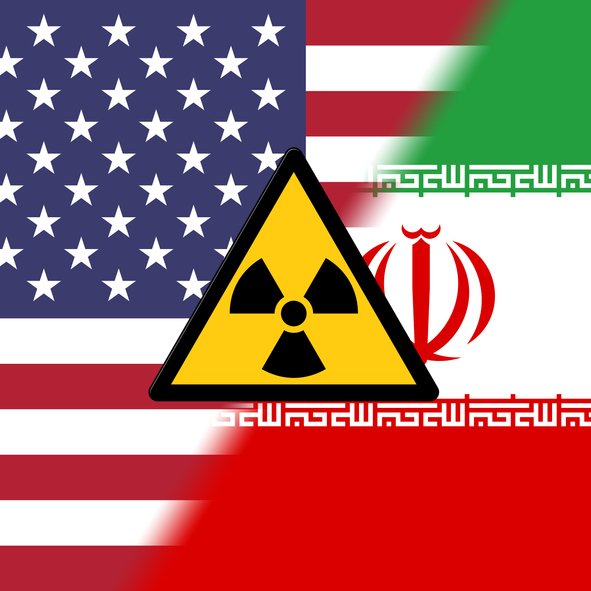
The deal logic is simple: there is already a June memorandum and a 60-day negotiating window, so the market is really asking whether that framework turns into a **mutually signed or adopted final instrument** by 31 August. Public reporting has described the June text as an MOU or roadmap rather than a final accord, with technical talks still required on enrichment, inspections, sanctions relief and frozen assets.[1][11][12]
History suggests caution with early headlines. Similar Iran-US rounds this year repeatedly produced “progress” or “general principles” without a binding end-state, and Reuters reported in July that Doha talks focused on implementation issues and made no headway towards a lasting peace.[4][5][6] For traders, the low crowd-implied price is also a function of market plumbing: prediction-market depth often depends on fresh deposits, low-friction on-ramps such as Klarna and SEPA, and easy exits through stablecoin rails like USDC, so weaker retail flow can leave even headline-heavy events thinly traded.
The key catalysts are formal communiqués, mediator statements from Qatar or Pakistan, and any US Treasury or IAEA notices on sanctions waivers or inspector access, because those would signal the agreement is moving from framework to execution.[1][7][8] Reuters has also flagged the dependence on technical follow-through in the Strait of Hormuz and on unfreezing Iranian funds, both of which could delay signature if either side adds conditions.[5][11]
Methodology
This page compares US-Iran Final Nuclear Deal by…? with a focus on payment rails and deposit friction. Polymarket accepts USDC on Polygon only; Kalshi only ACH/Plaid (US only); Betfair card/SEPA in EU/UK; Manifold no deposit. Polymarket Klarna UK additionally offers Klarna and SOFORT as fiat on-ramps to USDC. Live odds reflect the Polymarket order book.
Resolution & payout
Settlement path determines payout latency. Polymarket settles on-chain (USDC, minutes). Broker frontends like Polymarket Klarna UK add Klarna/SOFORT as fiat withdrawal options with T+1 processing. Kalshi: USD via ACH (T+1 to T+3). Betfair: local currency via card/SEPA (T+1 to T+5).
UK Frequently Asked Questions
- How does Klarna deposit work on Polymarket Klarna UK?
- You enter the deposit amount in EUR/GBP, choose Klarna as the method, run through Klarna's standard authentication (Pay Later or Direct Bank Transfer), and Polymarket Klarna UK converts internally to USDC for the Polymarket order book. Processing: typically under 30 minutes.
- Which payment methods are supported?
- Klarna (Pay Now / Pay Later), SOFORT, SEPA bank transfer, credit card (Visa/Mastercard), Apple Pay, Google Pay, and direct USDC deposit on Polygon. Availability depends on your jurisdiction.
- Can UK traders use Klarna to deposit on Polymarket?
- Polymarket does not natively accept Klarna. To fund a Polymarket account from the UK, you must first purchase USDC via a crypto exchange (Coinbase UK, Kraken) or Revolut, then transfer to a Polygon-compatible wallet. Some third-party on-ramps (MoonPay, Transak) accept UK debit cards and may support Klarna buy-now-pay-later for crypto purchases.
- What payment methods can UK users use for Polymarket?
- UK traders typically use: (1) Coinbase UK or Kraken — buy USDC with GBP debit card or bank transfer; (2) Revolut — buy crypto and send to wallet; (3) MoonPay or Transak — Visa/Mastercard UK debit card directly to USDC on Polygon. Standard GBP-to-USDC conversion fees range from 0.5–2.5%.
- How long do Polymarket withdrawals take for UK users?
- Polymarket withdrawals to your Polygon wallet are instant (on-chain). Converting USDC back to GBP via Coinbase UK or Kraken typically takes 1–3 business days for bank transfer, or near-instant for Revolut. Polygon gas fees are minimal (<$0.01 per transaction).
%22%2F%3E%3Cpath%20d%3D%22M%206%2066%20A%2026%2026%200%200%201%2058%2066%22%20fill%3D%22%23E6B98D%22%20opacity%3D%220.9%22%2F%3E%3Ccircle%20cx%3D%2232%22%20cy%3D%2226%22%20r%3D%2222%22%20fill%3D%22%23F5CBA7%22%2F%3E%3Crect%20x%3D%2210%22%20y%3D%224%22%20width%3D%2244%22%20height%3D%2214%22%20rx%3D%227%22%20fill%3D%22%2310b981%22%20opacity%3D%220.9%22%2F%3E%3Crect%20x%3D%228%22%20%20y%3D%2218%22%20width%3D%228%22%20%20height%3D%2218%22%20rx%3D%224%22%20fill%3D%22%2310b981%22%20opacity%3D%220.7%22%2F%3E%3Crect%20x%3D%2248%22%20y%3D%2218%22%20width%3D%228%22%20%20height%3D%2218%22%20rx%3D%224%22%20fill%3D%22%2310b981%22%20opacity%3D%220.7%22%2F%3E%3C%2Fsvg%3E) and
and%22%2F%3E%3Cpath%20d%3D%22M%206%2066%20A%2026%2026%200%200%201%2058%2066%22%20fill%3D%22%23E6B98D%22%20opacity%3D%220.9%22%2F%3E%3Ccircle%20cx%3D%2232%22%20cy%3D%2226%22%20r%3D%2222%22%20fill%3D%22%23F5CBA7%22%2F%3E%3Crect%20x%3D%2214%22%20y%3D%224%22%20width%3D%2236%22%20height%3D%228%22%20rx%3D%224%22%20fill%3D%22%2310b981%22%2F%3E%3C%2Fsvg%3E)
Trade US-Iran Final Nuclear Deal by…? on Polymarket Klarna UK
Live order book, 0% fees, USDC settlement in seconds.
Open live market →