Market statistics
- Total volume
- $2.1M
- 24h volume
- $142K
- Liquidity
- $520K
- Open interest
- $383K
- Comments
- 28
Platform comparison
| Platform | YES odds | NO odds | Fee | KYC | Settlement | |
|---|---|---|---|---|---|---|
Polymarket (via PolyGram) Pick polygram.ink (preferred broker) |
0% | 100% | 0% (USDC on-chain) | No-KYC up to $1,500 | USDC, auto via UMA oracle | Go to the live market → |
Polymarket (direct) polymarket.com |
0% | 100% | 0% | Geo-blocked in US/UK/EU | USDC, on-chain | Go to the live market → |
Kalshi kalshi.com |
— | — | Up to 7% per trade | US-only, KYC required | USD | Go to the live market → |
Betfair Exchange betfair.com |
— | — | 2-5% commission | Full KYC from first trade | GBP / EUR | Go to the live market → |
Manifold Markets manifold.markets |
— | — | Play-money (mana) | None — play-money | Mana (no cash-out) | Go to the live market → |
Available prediction outcomes (28)
Sorted by descending live probability. Click any outcome to trade it on PolyGram.
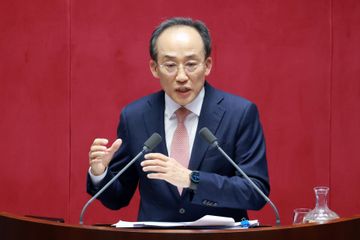


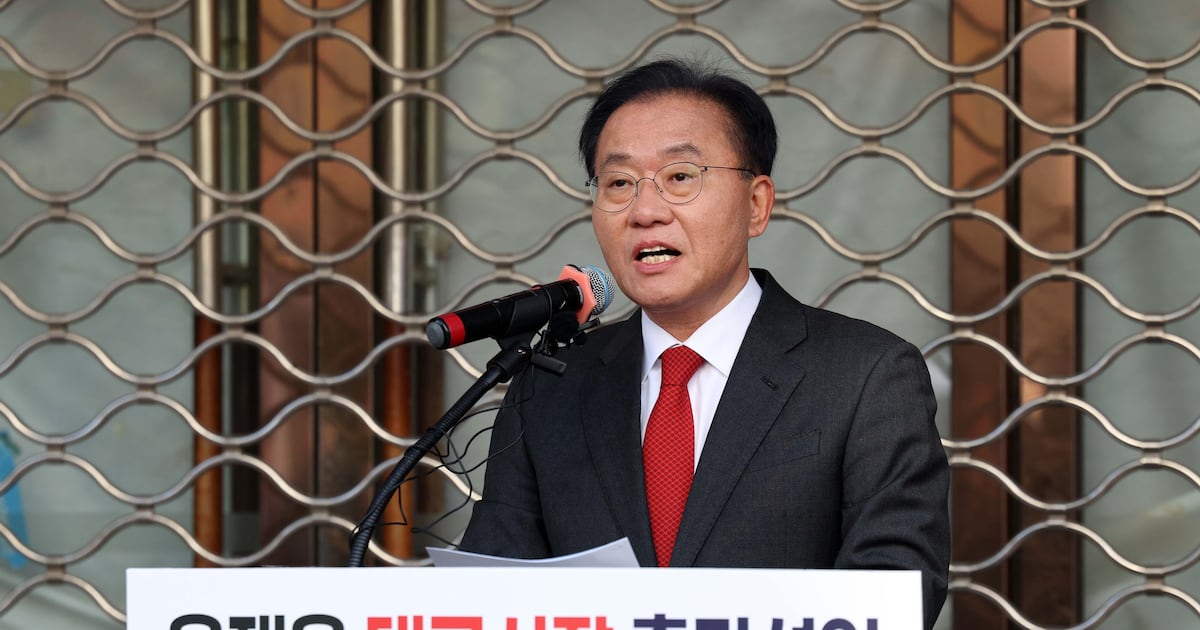

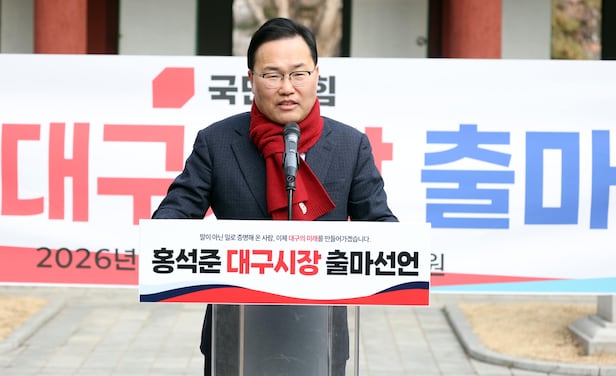



Market context
South Korea will hold a mayoral election in Daegu on 3 June 2026. Daegu, the country's fourth-largest city by population, elects its mayor every four years under the Local Autonomy Act. The incumbent mayor's term expires in mid-2026, triggering this scheduled contest. The election determines executive authority over a metropolitan area of roughly 2.4 million residents and a municipal budget exceeding 10 trillion won annually. Only candidates who formally register with the National Election Commission and appear on the official ballot count toward settlement; interim or acting mayors do not resolve this market.
South Korean mayoral races typically feature candidates from the Democratic Party and People Power Party, though independent and minor-party candidates regularly contest seats. Daegu has historically leaned toward conservative politics, with the People Power Party or its predecessors winning five of the last six mayoral elections. However, regional political sentiment shifts between election cycles, and candidate quality, local issues, and national political momentum all influence outcomes. The 0% implied probability reflects either minimal trading activity or market participants' assessment that no single candidate has yet emerged as sufficiently certain to back at current odds.
Traders should monitor candidate registration deadlines, typically announced 60–90 days before polling day, and track coverage from Yonhapnews or the National Election Commission's official statements. Local media reporting on candidate platforms, campaign finance disclosures, and any polling data will signal shifting expectations. The settlement window closes 31 December 2026; results should be known within days of the election, but any dispute resolution through the courts could delay final confirmation.
Methodology
This page compares Daegu Mayoral Election Winner with a focus on payment rails and deposit friction. Polymarket accepts USDC on Polygon only; Kalshi only ACH/Plaid (US only); Betfair card/SEPA in EU/UK; Manifold no deposit. PolyGram additionally offers Klarna and SOFORT as fiat on-ramps to USDC. Live odds reflect the Polymarket order book.
Resolution & payout
Settlement path determines payout latency. Polymarket settles on-chain (USDC, minutes). Broker frontends like PolyGram add Klarna/SOFORT as fiat withdrawal options with T+1 processing. Kalshi: USD via ACH (T+1 to T+3). Betfair: local currency via card/SEPA (T+1 to T+5).
FAQ
- How does Klarna deposit work on PolyGram?
- You enter the deposit amount in EUR/GBP, choose Klarna as the method, run through Klarna's standard authentication (Pay Later or Direct Bank Transfer), and PolyGram converts internally to USDC for the Polymarket order book. Processing: typically under 30 minutes.
- What does SOFORT cost as a deposit method?
- PolyGram charges no fees for SOFORT. The only cost is the internal FX spread (typically <1%) on EUR→USDC conversion. SOFORT itself has no end-user fees — the platform absorbs acquirer costs.
- Can I deposit with a credit card?
- Yes, Visa and Mastercard. Credit card deposits carry a ~2.5% acquirer surcharge (standard for card payments). Apple Pay and Google Pay run on the same card rails — same surcharge.
- How do withdrawals work?
- Identical methods in reverse. SEPA withdrawal: T+1 (standard) or under 10 seconds (SEPA Instant). Klarna withdrawals process via bank-account refund. USDC withdrawal to external wallet: Polygon gas cost (typically $0.01).
- Are payment details protected?
- Yes. Card and bank details are never stored by PolyGram — they pass directly through PCI-DSS compliant payment service providers (Adyen, Stripe). PolyGram retains only transaction IDs and Klarna reference numbers for reconciliation.
Trade Daegu Mayoral Election Winner on PolyGram
Live order book, 0% fees, USDC settlement in seconds.
Open live market →